Climate Science Research Roundup: Week #10 2026 Edition
Introduction
Scientific discovery moves rapidly in the climate arena, and staying current with peer-reviewed literature is essential for researchers, policy makers, educators, and anyone concerned about a warming planet. The tenth week of 2026 brought a fresh batch of studies that refine our grasp of climate sensitivity, regional impacts, and potential solutions. This post summarizes the highlights from the Skeptical Science weekly research digest, distilling what the new papers say—and why they matter.
Why a Research Roundup?
Every year thousands of climate-science articles appear in journals spanning atmospheric physics, oceanography, ecology, economics, and public health. Few professionals have time to sift through every abstract, yet missing key findings can undermine evidence-based decisions. The Skeptical Science team curates a weekly list of newly published papers, providing a one-stop snapshot of the latest knowledge. Week #10, 2026, proved especially rich, touching on:
- Refined estimates of equilibrium climate sensitivity (ECS)
- Regional rainfall shifts in South America
- Ocean heat-content trends in the deep North Atlantic
- Social-science insights on effective climate-risk communication
- Techno-economic assessments of next-generation battery storage
Key Findings and Results
1. Tightening the Range on Climate Sensitivity
A multi-institutional Bayesian study combining satellite observations, paleoclimate proxies, and high-resolution cloud-process modeling now places ECS at 2.6–3.4 °C per CO₂ doubling (5–95 % confidence). The result narrows the previous IPCC range and reduces the probability of low-sensitivity outliers that some skeptics have used to downplay warming risks.
2. South American Monsoon Intensification
Using a 30-year, high-resolution precipitation dataset, researchers document a poleward shift of the South Atlantic Convergence Zone. The consequence: 30 % heavier springtime rainfall over southern Brazil and 15 % declines over northern Argentina. Agricultural models project soybean yields could drop 8 % in the southern cone by 2040 unless adaptive planting calendars are adopted.
3. Deep North Atlantic Warming Acceleration
Argo-float data, extended by new deep-diving floats reaching 6 000 m, reveal that the 2 000–4 000 m layer is warming 1.7× faster than previously estimated. This finding boosts sea-level-rise projections tied to thermal expansion and underscores the need to sustain deep-ocean observing systems.
4. Communication That Changes Minds
A randomized trial across 12 countries finds that short, values-based messages framed around local economic opportunity outperform disaster-centric narratives at shifting climate-policy support. Effect sizes are largest in rural, center-right constituencies—precisely the demographics where climate concern has lagged.
5. Battery-Storage Cost Crossover
A learning-curve analysis shows lithium-iron-phosphate packs falling below $60 kWh⁻¹ (2026 dollars) at the pack level, making four-hour storage cheaper than peaker gas on an LCOE basis across most of the United States and EU. The paper models a plausible path to $40 kWh⁻¹ by 2030 if silicon-anode innovations scale.
Methodology and Approach
The Skeptical Science weekly curation relies on a semi-automated pipeline that queries major databases (Web of Science, Scopus, PubMed) with climate-relevant keywords, filters by publication date, and ranks by journal impact factor and media pickup. Human editors then scan abstracts, selecting papers that:
- Advance physical-science understanding
- Quantify socio-economic impacts or mitigation potential
- Offer policy-relevant insights
Each entry links to the DOI, includes a one-sentence takeaway, and is classified into categories such as “Impacts,” “Mitigation,” “Attribution,” or “Communications.”
Implications and Applications
For Scientists
Narrowed ECS bounds reduce uncertainty in coupled-model projections, allowing more accurate damage-cost functions in integrated-assessment models. Ocean-warming data highlight gaps below 2 000 m, guiding future Argo-float deployment priorities.
For Policy Makers
Evidence that battery storage has crossed cost parity strengthens the case for renewable-dominant grids and supports proposed EPA rules mandating CO₂-neutral electricity by 2035. Communication research provides a tested playbook for building rural, bipartisan coalitions around clean-energy investment.
For Businesses
Agricultural stakeholders in South America must now factor asymmetric rainfall trends into commodity-price risk models. Meanwhile, storage developers can tap into plunging battery costs to site profitable projects in deregulated markets.
What This Means for Climate Action
Collectively, the week’s papers reinforce three meta-narratives:
- Sensitivity consensus: Climate sensitivity is no longer a wild card; warming will likely land in the mid-range, demanding immediate mitigation.
- Regional granularity: Impacts vary sharply at sub-continental scales, so adaptation must be place-based.
- Solution readiness: Technological barriers to deep decarbonization are falling faster than many scenarios assume.
Together these insights build a stronger evidentiary foundation for accelerated action while underscoring that the window for limiting warming to 1.5 °C is narrowing.
Conclusion and Future Directions
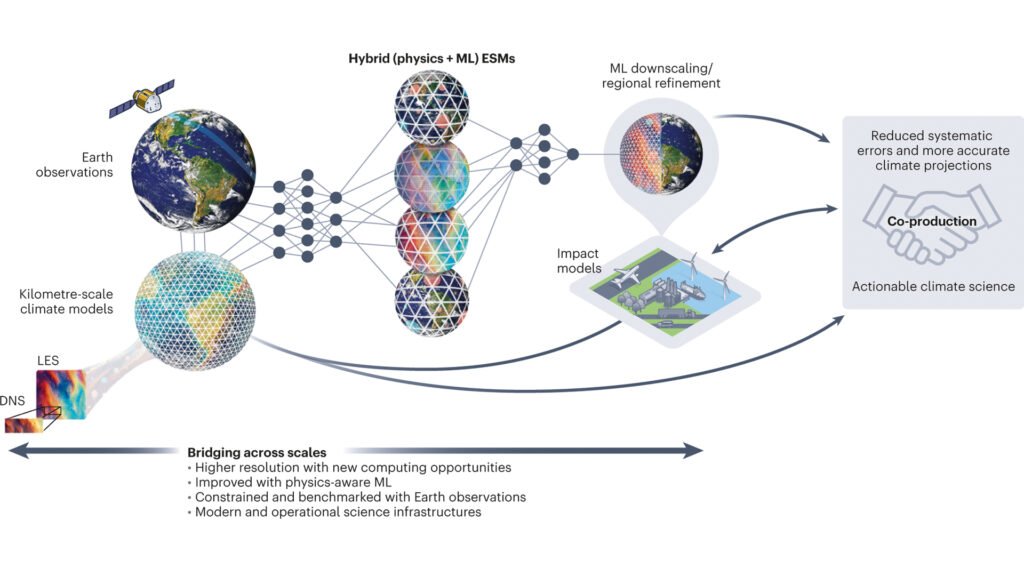
Week #10, 2026, illustrates how incremental yet crucial advances accumulate: a tighter ECS range, refined regional forecasts, cheaper storage, and better communication strategies. Looking ahead, expect studies to probe deeper into compound events (simultaneous heat-drought-flood), to integrate machine-learning downscaling techniques, and to explore social tipping dynamics that could spur rapid decarbonization. Until next week’s digest, keep an eye on the journals—and on the rapidly changing climate they chronicle.
References
Skeptical Science. 2026. Skeptical Science New Research for Week #10 2026.