Revolutionary AI Agent Zephyrus Transforms Weather and Climate Data Analysis
Introduction
Scientists at the University of California San Diego have unveiled a groundbreaking artificial intelligence agent named Zephyrus that promises to transform how researchers, students, and meteorologists interact with weather and climate data. This innovative system represents a significant leap forward in making complex atmospheric science more accessible to a broader audience.
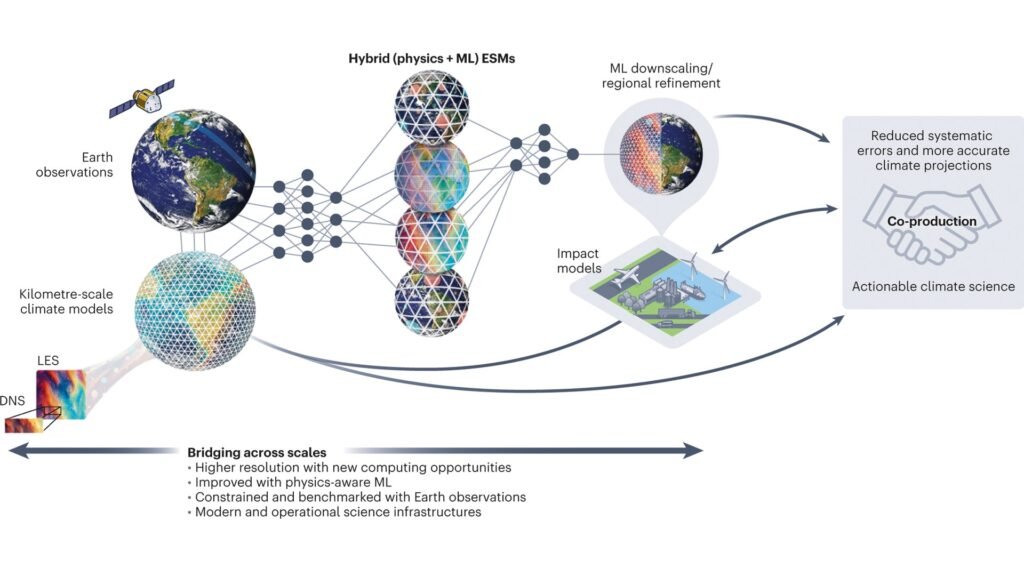
The development comes at a crucial time when AI-driven weather forecasting models have dramatically improved prediction accuracy, but analyzing the resulting data remains challenging and time-consuming. Zephyrus addresses this critical gap by serving as an intelligent intermediary that can understand natural language questions about weather patterns and provide clear, comprehensible answers based on complex meteorological data.
Understanding the Research and Development
The UC San Diego research team, comprising computer scientists and weather scientists from the Scripps Institution of Oceanography and the Department of Computer Science and Engineering, set out to solve two fundamental problems in modern meteorology. First, existing AI weather models cannot describe their findings in plain language, creating a communication barrier between the technology and its users. Second, these models struggle to reason about text-based information such as meteorology reports and weather bulletins.
Zephyrus tackles both challenges by creating an environment where AI agents can interact with weather models and data through code while maintaining the ability to communicate with users in natural language. The system translates language-based queries into computational commands, processes the data, and then converts the results back into easily understandable explanations.
The research team tested four frontier Large Language Models (LLMs) to power Zephyrus, finding that all performed with similar accuracy levels. This suggests that the framework’s architecture, rather than any specific language model, is key to its effectiveness.
Key Findings and Results
The initial testing of Zephyrus revealed promising capabilities across various weather analysis tasks:
- Simple Location-Based Queries: Zephyrus successfully identified locations with specific weather conditions, demonstrating strong performance in basic meteorological searches
- Temporal Forecasting: The system accurately provided weather forecasts for specific locations at designated times
- Data Extraction: Zephyrus proved capable of extracting relevant information from complex weather datasets and explaining it in plain English
However, the researchers identified areas for improvement, particularly in handling more complex analytical tasks. The system currently struggles with locating areas experiencing extreme weather conditions and generating comprehensive weather reports, indicating opportunities for future development.
Methodology and Approach
The development of Zephyrus involved creating a sophisticated framework that bridges the gap between code-driven AI models and language-based AI agents. The researchers established an interactive environment where the AI agent could access and manipulate weather data through programming interfaces while maintaining conversational abilities with human users.
This approach allows Zephyrus to function as a knowledgeable assistant capable of understanding context, processing complex meteorological information, and providing insights in accessible language. The system’s architecture enables it to handle multimodal data, combining numerical weather data with textual information from various sources.
Implications and Applications
The potential applications of Zephyrus extend far beyond simple weather queries. The system represents a significant step toward democratizing earth science by removing technical barriers that have traditionally limited access to meteorological data analysis. Students, researchers, and professionals without extensive programming knowledge can now interact with sophisticated weather models and extract meaningful insights.
The research team envisions Zephyrus as a prototype for AI co-scientists that could dramatically lower the barrier to entry in climate science. By making weather and climate data more accessible, the system could accelerate research, improve educational opportunities, and enhance decision-making processes in sectors heavily influenced by weather patterns.
What This Means for Climate Science and Meteorology
The introduction of Zephyrus could have profound implications for how society approaches climate and weather research. Traditional barriers to entry in atmospheric science often require extensive technical knowledge in both meteorology and data analysis. Zephyrus eliminates these obstacles, potentially enabling a new generation of researchers to contribute to climate science.
The system’s ability to reason about multimodal data and provide natural language explanations could transform how we understand and communicate about climate change, extreme weather events, and long-term atmospheric trends. This enhanced accessibility could lead to more diverse perspectives and innovative approaches to climate challenges.
Furthermore, the success of Zephyrus in weather science provides a template for similar AI agents in other scientific disciplines. The researchers hope to expand this approach to broader climate science applications, potentially creating AI assistants capable of helping researchers understand complex climate models and their implications.
Future Directions and Next Steps
The research team has outlined ambitious plans for Zephyrus’s evolution. The next iteration will incorporate larger training datasets to improve the system’s performance on complex analytical tasks. Additionally, researchers plan to fine-tune open-source models specifically for climate-focused applications, potentially creating specialized versions of Zephyrus for different aspects of earth science.
The long-term vision extends beyond weather forecasting to encompass the full spectrum of climate science, including climate change modeling, extreme weather prediction, and environmental impact assessment. As the system evolves, it could become an indispensable tool for researchers, policymakers, and educators working to understand and address climate challenges.
Conclusion
Zephyrus represents a significant milestone in the integration of artificial intelligence with climate science. By successfully bridging the gap between complex computational models and human communication, the system opens new possibilities for weather and climate research. Its development signals a future where sophisticated scientific analysis becomes more accessible, potentially accelerating our understanding of atmospheric phenomena and climate change.
As climate change continues to pose one of humanity’s greatest challenges, tools like Zephyrus that democratize access to scientific data and analysis become increasingly valuable. The UC San Diego team’s innovative approach to creating AI co-scientists could fundamentally transform how we study, understand, and respond to weather and climate phenomena, ultimately contributing to more informed decision-making and policy development in an era of rapid environmental change.
References
UC San Diego Today. (2026, March 10). New AI Agent Could Transform How Scientists Study Weather and Climate. https://today.ucsd.edu/story/new-ai-agent-could-transform-how-scientists-study-weather-and-climate