Climate Change Linked to Global Surge in Infectious Diseases, Landmark Study Warns
Introduction: A Slow-Motion Health Crisis
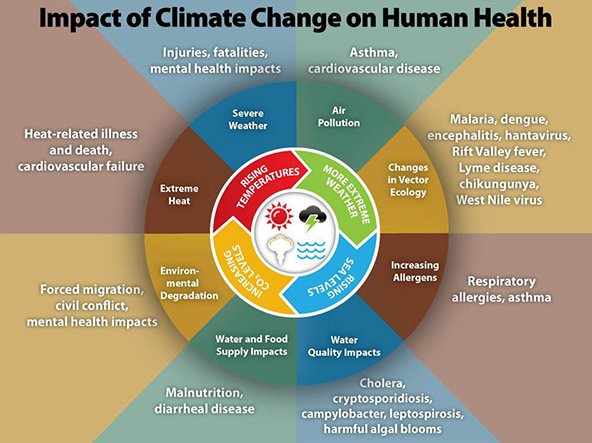
Climate change is frequently framed through the lens of extreme weather events—heatwaves, hurricanes, floods—yet its insidious impact on global health security is unfolding far more quietly. A landmark study released by The Global Health Network now provides the most comprehensive qualitative evidence to date that planetary warming, socioeconomic inequality and antimicrobial resistance (AMR) are converging to drive a “creeping catastrophe” of infectious-disease expansion.
Drawing on survey and interview data from 3,752 health professionals and researchers in 151 countries—86.9 % of whom work in low- and middle-income countries (LMICs)—the investigation is the largest global assessment of its kind. Rather than projecting statistical models, the study captures frontline observations of which diseases are moving, where they are emerging, and why health systems are struggling to keep pace.
Understanding the Research: What Makes This Study Unique
Most climate–health projections rely on biological or meteorological modelling. This analysis flips the lens, prioritising practitioner experience to map perceived escalation. Key design elements include:
- Scale: 3,752 respondents across every WHO region.
- Representation: Nearly nine in ten participants based in LMICs, ensuring voices from the settings most affected by climate-sensitive diseases.
- Scope: Open-ended questions on disease threats, transmission drivers, and preparedness gaps.
- Validation: Answers coded by a multidisciplinary team and weighted for regional disease burden.
The result is a qualitative heat-map of where infectious-disease risk is intensifying fastest, corroborating and enriching quantitative forecasts.
Key Findings: Which Diseases Are Surging and Why
1. Vector-borne diseases lead the charge
Experts ranked malaria and dengue as the most rapidly worsening threats. Warmer nights and altered rainfall patterns extend both the breeding season and the geographic range of Anopheles and Aedes mosquitoes. Highland areas in East Africa, the Andes and parts of South-East Asia reported locally acquired cases where transmission was previously impossible due to low ambient temperatures.
2. Persistent killers: TB and HIV on the move
While not vector-borne, tuberculosis and HIV/AIDS were flagged as climate-sensitive for the first time at this scale. Drought-induced migration, food insecurity and overcrowding facilitate TB transmission, while extreme weather events disrupt antiretroviral supply chains and health-service access, leading to viral rebound and higher community viral load.
3. Antimicrobial resistance amplifies the danger
Climate-driven overuse of antibiotics—both for human disease and in warmer-region aquaculture and livestock—accelerates AMR, threatening to erode the few treatment options available for severe bacterial co-infections.
4. Socioeconomic inequality as a threat multiplier
Participants consistently highlighted that poverty, inadequate housing and weak surveillance systems magnify climate impacts. Wealthier nations can deploy early-warning systems and vector-control programmes; LMICs often lack the resources to replicate these interventions, widening global health inequities.
Methodology in Focus: From Field Insight to Global Signal
Researchers used a three-step mixed-methods design:
- Online survey: Distributed through The Global Health Network’s regional hubs and partner institutions. Questions explored which diseases are increasing, observable geographic shifts, and primary drivers.
- Semi-structured interviews: A 10 % subsample (n = 375) provided narrative detail on mechanisms linking climate variables to disease escalation.
- Thematic analysis: Two independent coders categorized responses; inter-rater reliability exceeded κ = 0.82. Findings were then mapped against climate projections (IPCC AR6) and WHO disease-burden estimates to triangulate results.
This practitioner-centred approach captures real-time signals often invisible to traditional surveillance, which can lag by months or years.
Implications: Why a “Creeping Catastrophe” Matters
Unlike sudden outbreaks, slow geographic expansion of endemic diseases attracts little media attention and, consequently, limited funding. Yet the long-term impact on:
- Health-system burden: Clinics in previously non-endemic areas face diagnostic delays, drug shortages and staff inexperience.
- Economic productivity:
- Global health security: Pathogens that establish footholds in new regions increase the probability of international spread, as demonstrated by Zika (2015–16) and chikungunya (2004–present).
Recurrent malaria or dengue in adult workers can reduce GDP growth by 0.25–1.3 % in high-burden countries, according to prior World Bank estimates.
What This Means for Policy and Practice
Climate-adaptation strategies must integrate health
National Adaptation Plans submitted under the Paris Agreement rarely include quantified targets for vector control or AMR containment. Integrating practitioner insights could rectify this gap, ensuring that adaptation financing directly addresses observed disease shifts.
Strengthen cross-border surveillance
Mobile laboratories and genomic sequencing—pioneered during the mpox outbreak in the Democratic Republic of Congo, Tanzania and Burkina Faso under the EU-funded ODIN initiative—should be embedded into routine public-health systems for real-time detection of novel pathogen introductions.
Build workforce capacity in transition zones
Training clinicians to recognise “unfamiliar” diseases is critical. The Global Health Network’s free, peer-reviewed courses reached over 316,000 learners in 2025, illustrating the appetite for context-specific professional development. Scaling similar programmes in hotspot districts could shorten diagnostic delays and save lives.
Address socioeconomic drivers
Climate-sensitive disease control cannot be divorced from poverty reduction. Investments in housing, sanitation and gender equity yield dual benefits: they blunt climate impacts and strengthen community resilience against future health shocks.
Looking Ahead: Research Gaps and Next Steps
While the study provides unparalleled insight into practitioner perception, authors emphasise the need for:
- Standardised climate–disease indicators that integrate qualitative and quantitative data streams.
- Longitudinal cohorts to quantify the attributable fraction of disease expansion directly linked to warming versus land-use change or conflict.
- Randomised trials of adaptation interventions (e.g., targeted larviciding, community-based TB adherence during climate emergencies) to build an evidence base for cost-effective action.
Conclusion: From Awareness to Action
The Global Health Network’s analysis underscores that climate change is not a distant threat—it is already reshaping infectious-disease geography in ways that will intensify without immediate, coordinated intervention. By foregrounding frontline observations, the study transforms abstract modelling into tangible human risk, providing policymakers with an evidence-based blueprint for climate-resilient health systems. Failure to act risks converting today’s “creeping catastrophe” into tomorrow’s pervasive reality.
References
The Global Health Network. (2025). Newsletter December 2025: New study warns of ‘creeping catastrophe’ as climate change driving global rise in infectious diseases. Retrieved from https://media.tghn.org/medialibrary/2025/12/The_Global_Health_Network_Newsletter_December_2025.pdf