New Climate Research Centre Launches to Drive Climate-Smart Agriculture in Eswatini
Introduction: A Science-Backed Response to Climate Pressure
Eswatini has officially opened the Centre for Climate Change and Sustainability Research (C3SR) at the University of Eswatini (UNESWA), creating the country’s first dedicated academic unit tasked with turning climate data into actionable guidance for farmers, investors and government departments. Launched on 12 March 2026 at the Kwaluseni campus, the centre aims to fill critical knowledge gaps that have left many of the nation’s 60,000 smallholder farmers vulnerable to erratic rainfall, flash floods and prolonged dry spells.
According to government analysis, unchecked climate impacts could cost Eswatini US$3 billion in economic damages over the coming decades—a sum that dwarfs the projected cost of adaptation. By embedding rigorous research inside one of southern Africa’s fastest-warming regions, C3SR is designed to make every dollar spent on adaptation count, while steering national policy toward evidence-based, climate-smart agriculture.
Why Localised Climate Science Matters for Eswatini’s Farmers
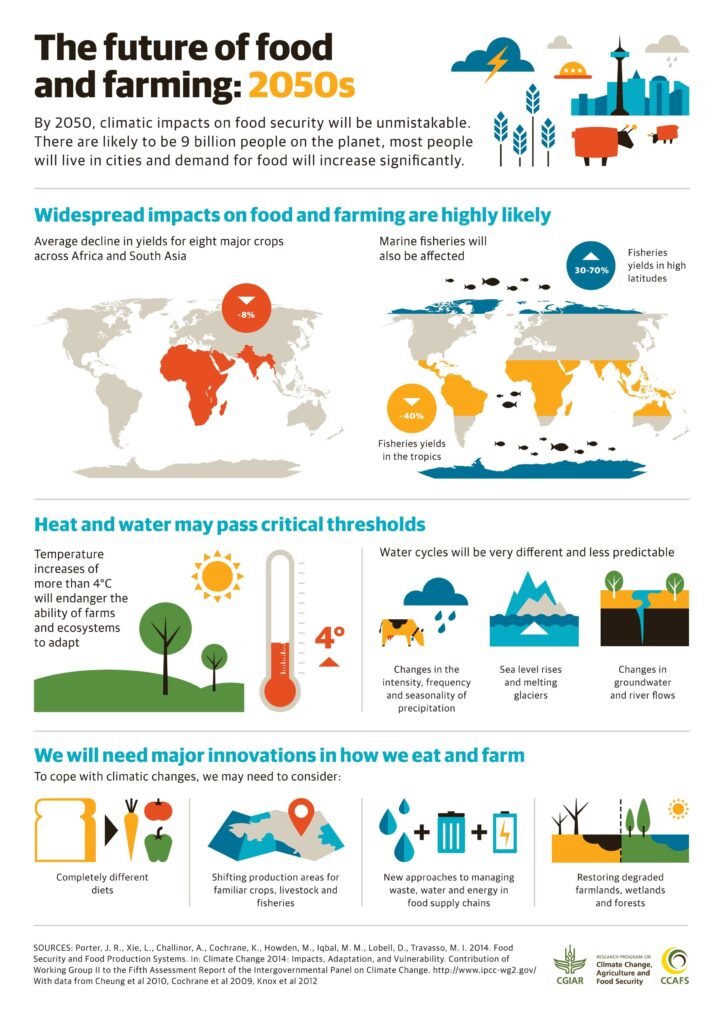
Agriculture contributes roughly 8 % of gross domestic product and employs about 70 % of the rural population, yet only one in four farming households has access to irrigation. Maize, the staple crop, is almost entirely rain-fed, making yields highly sensitive to seasonal shifts that climate change is already amplifying:
- Spring rains now arrive up to four weeks later than the 1970–2000 average.
- Mid-season dry spells have lengthened from 7 to 18 days in key maize-growing districts.
- Extreme events—hailstorms, heat spikes and flash floods—have tripled in frequency since 2000.
Because most adaptation finance flows through regional or continental programmes, locally calibrated data on soil moisture thresholds, heat-tolerant seed varieties and water-harvesting efficiency have been scarce. C3SR intends to change that by prioritising hyper-local experiments and rapid knowledge transfer to extension services.
Inside C3SR: Structure, Mandate and Research Priorities
The centre operates as an autonomous institute within UNESWA, reporting jointly to the Ministry of Tourism and Environmental Affairs and the Ministry of Agriculture. Five thematic units anchor its five-year work plan:
- Climate-Smart Crop Innovations – field trials of drought-resistant sorghum, millet and maize hybrids, plus inter-cropping regimes that raise soil organic carbon.
- Water Security and Irrigation Efficiency – sensor-based scheduling, small-scale drip kits and on-farm rainwater storage modelling.
- Carbon and Ecosystem Services – measuring above- and below-ground carbon in savannah grasslands and agro-forestry plots to inform future carbon-credit schemes.
- Climate Finance and Adaptation Economics – cost–benefit analysis of adaptation options to guide public and private investment.
- Indigenous Knowledge and Community Resilience – documenting traditional forecasting indicators and integrating them with modern climate services.
Each unit pairs senior academics with graduate students and farmer co-researchers, ensuring that research questions emerge from real field challenges rather than abstract academic agendas.
Methodology: From Greenhouse to Government
C3SR employs a “transdisciplinary pipeline” that moves projects through four tightly linked stages:
Stage 1: Participatory Problem Mapping
Extension officers, traditional leaders and farmer representatives rank climate risks in quarterly focus-group sessions. Data are geotagged and uploaded to an open-access risk dashboard.
Stage 2: Micro-Scale Trials
Researchers set up mother-baby demonstration plots—small on-station trials (< 0.5 ha) and larger satellite plots on participating farms—to test seed varieties or water-harvesting techniques under contrasting rainfall regimes generated with mobile rain-out shelters.
Stage 3: Evidence Synthesis and Costing
Biophysical results are combined with socio-economic surveys to compute metrics such as marginal benefit per millimetre of additional water saved or yield gain per degree-day of heat avoided.
Stage 4: Policy Packaging and Uptake
Short policy briefs (≤ 4 pages) and animated explainer videos are disseminated through WhatsApp groups that reach 3,800 farmers and 120 agricultural extension agents. Simultaneously, technical appendices feed directly into parliamentary portfolio committees and the National Climate Change Office.
Early Outputs and What They Show
Even before the official launch, C3SR pilot studies have generated actionable insights:
- Sorghum line “SDH-4” yielded 1.8 t/ha under 210 mm of seasonal rainfall—45 % more grain than the popular local variety.
- Installing 1,000-L plastic-lined water-harvesting tanks raised off-season vegetable income by E2,400 (US$135) per household over three months.
- Combining conservation agriculture (basins + mulch) with Bacillus subtilis bio-fertiliser reduced crop failure risk from 28 % to 9 % in model simulations.
Data such as these underpin the government’s recent decision to ear-mark US$12 million for climate-smart input subsidies in the 2026/27 national budget.
Implications for National Climate Policy and Finance
By emphasising locally validated, costed adaptation options, C3SR strengthens Eswatini’s position when negotiating climate-finance packages. The centre’s economic unit calculates that every US$1 invested in climate-smart agriculture returns US$3.40 in avoided damage and productivity gains within seven years—an argument that helped unlock an €8 million concessional loan from the European Investment Bank in late 2025.
On the policy side, draft guidelines now mandate that all district development plans include climate-risk screening informed by C3SR data layers. The Department of Meteorology is also piloting a 10-day agro-weather bulletin co-produced by C3SR scientists and traditional forecasters, merging satellite data with indigenous seasonal indicators.
Scaling Out: Regional Relevance and Knowledge Sharing
While C3SR focuses on Eswatini’s specific agro-ecological zones—Highveld, Middleveld, Lowveld and Lubombo plateau—its protocols are designed for easy replication across the southern African region, where similar rainfall gradients and smallholder constraints prevail. The centre has already signed memoranda of understanding with:
- The University of Pretoria’s Institute for Sustainable Malaria Control (linking vector-borne disease data to agricultural irrigation).
- Zimbabwe’s Marondera College of Agricultural Sciences (joint sorghum breeding trials).
- Mozambique’s Agricultural Research Institute (IIAM) for cross-border watershed management studies.
All datasets generated are published under Creative Commons CC-BY licences, maximising transparency and encouraging external validation.
Challenges and Next Steps
Despite its ambitious agenda, C3SR faces several hurdles:
- Funding continuity: Two-thirds of the centre’s US$4.5 million start-up budget is tied to competitive grants that must be renewed annually.
- Research–extension divide: Limited field vehicles and high fuel costs hamper frequent on-farm visits, slowing technology transfer.
- Data gaps: Only five automatic weather stations exist in a country the size of New Jersey; deploying 50 low-cost sensors is a top priority for 2027.
Management plans to address these issues through a blended financing model—combining government subventions, donor grants and private-sector contracts for carbon audits—and by expanding its digital advisory platform to reduce travel costs.
Conclusion: A Template for Climate-Smart Development
The launch of C3SR signals a shift from reactive disaster management toward proactive, science-led adaptation. By rooting research in local realities, packaging evidence for multiple audiences, and embedding economic analysis into every project, the centre offers a template that other small, climate-vulnerable nations can replicate. If early results translate into sustained policy uptake, Eswatini could safeguard food production, protect rural livelihoods and turn climate uncertainty into a driver of innovation rather than a threat to development.
References
Agribusiness Media. 2026. “New Climate Research Centre to Drive Climate-Smart Agriculture in Eswatini.” Agribusiness Media, 13 March. https://agribusinessmedia.com/2026/03/13/new-climate-research-centre/