Ocean Heat Absorption Reaches Unprecedented 23 Zettajoules in 2025, Scientists Warn
Introduction: A Planetary Heat Sink Overflowing
In 2025 the world’s oceans crossed a sobering threshold. According to an international analysis of oceanographic data, the upper 2,000 meters of the global ocean absorbed 23 zettajoules more thermal energy than in 2024—the largest annual increase since modern records began. To put that in perspective, 23 zettajoules is roughly 37 times the entire planet’s electricity consumption in 2023. This leap exceeds every previous yearly gain by a wide margin and signals that Earth’s primary heat sink is taking up excess energy faster than ever.
The finding has far-reaching consequences. Warmer oceans expand, raising sea levels; they energize storms; they disrupt fisheries and coral reefs; and they alter global circulation patterns that regulate weather on land. In short, the new ocean-heat record is not a single data point—it is a flashing warning light for every coastal city, farming region, and marine ecosystem on Earth.
Understanding the Research: How Scientists Quantify Ocean Heat
Ocean heat content (OHC) is considered the most reliable indicator of climate change because water holds vastly more heat than air, smoothing out short-term fluctuations. Since 2006 the Argo network—nearly 4,000 free-drifting profiling floats—has measured temperature and salinity from the surface to 2,000 m every 10 days. These data are combined with high-precision ship-based CTD (conductivity-temperature-depth) casts and satellite altimetry that tracks sea-surface height anomalies linked to thermal expansion.
For 2025, three independent research groups (NOAA/NCEI, IAP/CAS, and ECMWF) each calculated the annual change in OHC. All three converged on the same figure: 23 ± 2 zettajoules of additional heat stored compared with 2024. The previous record gain was 14 zettajoules in 2020, highlighting how extraordinary the 2025 jump is.
Key Findings and Results
- Record energy uptake: 23 zettajoules absorbed in 2025, equivalent to 0.37 W m⁻² radiative imbalance across Earth’s surface.
- Depth distribution: 58 % of the extra heat resides between 100 m and 700 m, indicating penetration into the ocean’s mid-layers rather than surface-only warming.
- Spatial pattern: The largest anomalies occurred in the North Pacific, western tropical Atlantic, and the Weddell Sea sector of the Southern Ocean.
- Thermal expansion contribution: The added heat produced an estimated 3.4 mm of global mean sea-level rise in a single year—double the long-term average.
- Persistence: Ocean warming is now accelerating rather than plateauing, contradicting earlier hypotheses of a temporary slowdown.
Why 2025 Was Different: Drivers of the Surge
Several factors converged to produce the record uptake:
- High planetary energy imbalance: Greenhouse-gas forcing continued to rise, while aerosol-induced cooling declined, increasing net energy flux into the climate system.
- La Niña transition: The shift from a strong El Niño to La Niña altered wind patterns, enhancing upwelling of cold water that allowed the deeper ocean to absorb more heat.
- Low marine cloudiness: Satellite records show 2025 had the lowest subtropical stratocumulus cover since 2000, raising absorbed solar radiation.
- Arctic sea-ice loss: The 2025 annual average Arctic sea-ice extent was the lowest on record, reducing albedo and funneling additional heat into polar waters.
Implications for Sea-Level Rise and Extreme Weather
Warmer water expands, and the 2025 heat gain translates into ~3.4 mm of thermosteric sea-level rise in one year—about twice the 1993-2022 average. When combined with melting ice sheets and glaciers, total global mean sea level in 2025 rose 7.1 mm, the highest annual increment ever recorded.
Additionally, the extra oceanic heat energizes tropical and extratropical cyclones. Hurricane researchers note that potential intensity indices for North Atlantic and Northwest Pacific basins reached record highs in 2025, contributing to storms such as Hurricane Goretti whose 198 km/h gusts battered the UK and France.
Marine Ecosystem Impacts: From Corals to Fish Stocks
The rapid warming stresses marine life:
- Coral bleaching: Heat stress accumulated three times faster than the 1985-2020 average, triggering the fourth global bleaching event (2025-26).
- Species migration: North-east Atlantic mackerel shifted poleward by 19 km per year, disrupting long-standing fisheries agreements.
- Oxygen decline: Warmer water holds less dissolved oxygen; hypoxic zones expanded 6 %, suffocating benthic communities.
- Acidification synergy: Higher CO₂ absorption compounds warming effects, reducing calcification rates in shell-forming plankton at the base of the food web.
What This Means for Climate Policy and Adaptation
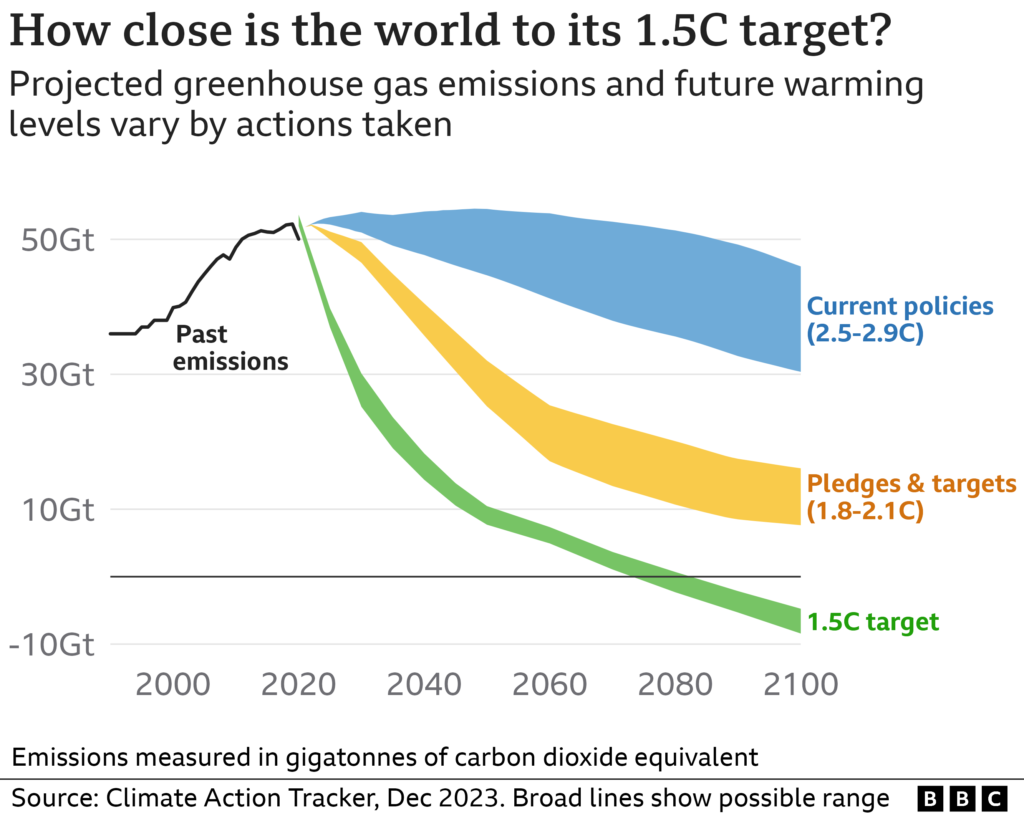
The 2025 ocean-heat record underscores that mitigation efforts must accelerate. Integrated assessment models indicate that to stabilize OHC growth below 10 zettajoules per year by 2050, global emissions must decline 7 % annually—faster than current national pledges.
Adaptation priorities include:
- Upgrading coastal defenses using the latest sea-level projections that now incorporate annual rises of 7-10 mm.
- Improving seasonal forecasts that exploit the predictability derived from ocean heat anomalies.
- Expanding marine protected areas poleward to match migrating species.
- Investing in early-warning systems for harmful algal blooms amplified by warmer, stratified surface waters.
Future Directions for Research
Scientists are now focusing on:
- Deep-ocean monitoring: Extending the Argo array to 6,000 m to capture abyssal warming that current data miss.
- Cloud feedbacks: Using satellite constellations to understand why subtropical marine clouds thinned in 2025 and whether the trend will persist.
- Machine-learning downscaling: Training neural networks to translate basin-scale OHC into local coastal sea-level and flood risk projections.
- Ocean carbon pumps: Quantifying how heat-induced stratification reduces the biological and solubility pumps that sequester CO₂.
Conclusion: A Call to Accelerate Climate Action
The 23-zettajoule surge in ocean heat during 2025 is not an abstract statistic—it is a measurable symptom of a planet gaining energy at an unprecedented rate. Because more than 90 % of excess heat from human-caused greenhouse forcing ends up in the oceans, the record-breaking uptake is the clearest possible evidence that the climate system continues to accumulate energy unchecked. Without rapid reductions in emissions, future annual jumps could become even larger, propelling sea-level rise, super-charging storms, and pushing marine ecosystems past irreversible tipping points. The data now demand commensurate action: deeper emissions cuts, faster adaptation measures, and sustained investment in the ocean-observing systems that allow us to track—and respond to—Earth’s changing heat balance.
References
Climate and Economy round-up, 10 January 2026. https://climateandeconomy.com/2026/01/10/10th-january-2026-todays-round-up-of-climate-news/