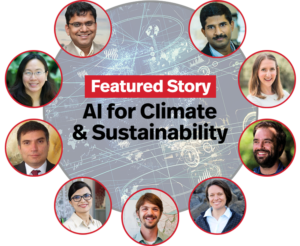

Norway Establishes Six National AI Research Centers to Advance Ethical and Sustainable Artificial Intelligence
Norway has launched six new national AI research centers with combined funding of up to NOK 1.2 billion over five years, positioning the country at the forefront of ethical and sustainable AI development while creating numerous opportunities for climate and environmental research.

New Study Exposes Hidden Gender Bias in AI Recruitment Tools
A Belgian study uncovers that gender bias in AI hiring systems is more pervasive than previously thought, with algorithms using proxy variables like hobbies and language patterns to inadvertently penalize female candidates despite attempts at de-biasing.

Belgian Study Exposes Hidden Gender Bias in AI Recruitment Tools
A comprehensive Belgian study has uncovered that AI-powered recruitment tools exhibit far more pervasive gender bias than previously recognized, even when explicit gender markers are removed from candidate data.
Revolutionary PVC Upcycling Method Transforms Plastic Waste into Valuable Chemicals
Researchers have developed a groundbreaking mechanochemical method that transforms polyvinyl chloride (PVC) waste into valuable chemical catalysts through ball-milling technology, offering a sustainable solution to plastic pollution while creating useful industrial compounds.
Sartorius Launches Next-Generation Cell Therapy Platform to Overcome Manufacturing Bottlenecks
Sartorius introduces Eveo, an integrated modular platform designed to eliminate structural production bottlenecks limiting patient access to transformative cell therapies like CAR-T treatments, marking a significant advancement in cell therapy manufacturing efficiency.