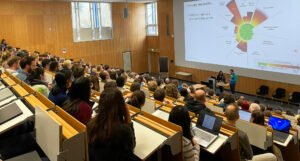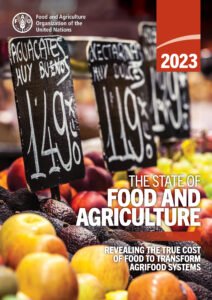

New Research Reveals Economic Barriers to Climate-Safe Food Transition in Europe
Groundbreaking research from Nature Portfolio quantifies the massive economic challenges facing Europe’s transition to climate-safe food systems, revealing stranded asset costs of up to €255 billion while highlighting global inequality in household material consumption patterns.
AI-Powered App Revolutionizes Dinosaur Footprint Identification on Scotland’s Isle of Skye
University of Edinburgh researchers have developed an innovative AI-powered application that enables scientists and citizen scientists to accurately identify and analyze dinosaur footprints, particularly those found on Scotland’s Isle of Skye, opening new possibilities for paleontological research and public engagement.
AI Energy Consumption Forecast to Dominate Data Center Electricity by 2028
Recent forecasts from Lawrence Berkeley National Laboratory predict AI will account for more than 50% of data center electricity consumption by 2028, transforming AI energy usage from a technical concern into a major infrastructure and policy challenge.

Global Material Inequality: How Affluent Overconsumption Threatens Sustainability Goals
A groundbreaking study published in Nature Sustainability demonstrates that global household material use is severely unequal, with the top 10% of consumers responsible for roughly one-third of material footprints and most overshoot beyond safe planetary limits. The research identifies curbing affluent overconsumption as a critical policy lever for achieving sustainable development while ensuring decent living standards for all.
New Study Reveals Industrial IoT’s Untapped Potential for Driving Sustainability Goals
A new global study by ABB uncovers a critical gap between intention and action in industrial sustainability efforts. While nearly all decision-makers recognize digitalisation as essential to achieving sustainability goals, only one-third have implemented Industrial IoT solutions at scale, highlighting a significant opportunity for improving energy efficiency and reducing emissions.